
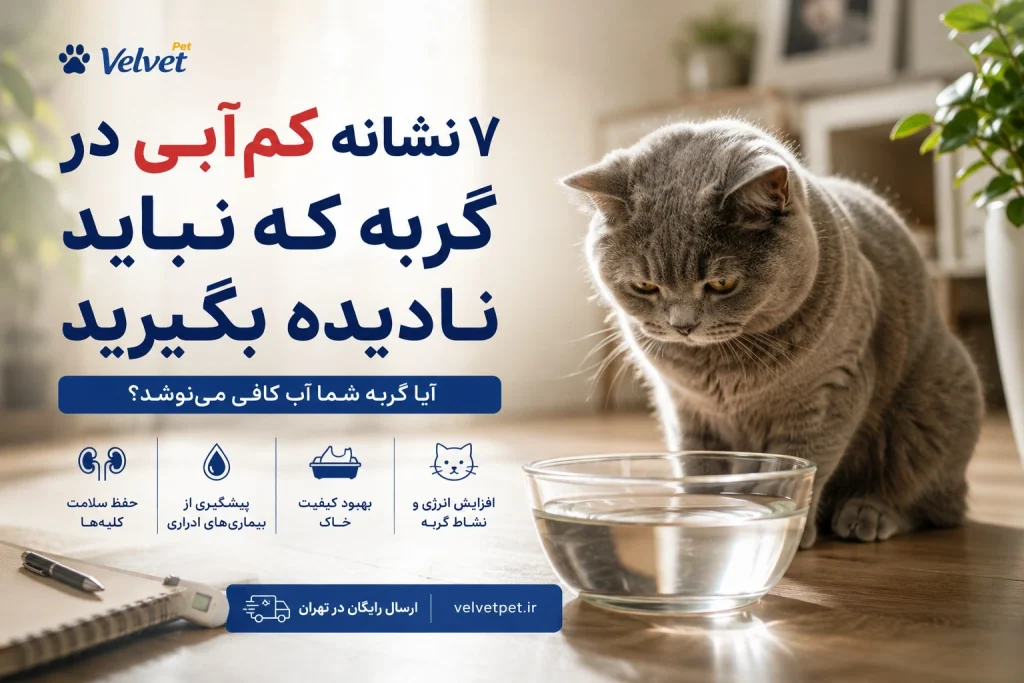
Is your cat drinking enough water?
Unlike many pets, cats naturally have little inclination to drink water.
Ancestors of today's cats obtained most of their needed water from their prey, and this trait still remains in many domestic cats. For this reason, some cats drink little even when their bodies need more water.
Prolonged dehydration can increase the risk of kidney problems, urinary tract diseases, and even constipation.
Below, we examine some important signs.
1. Skin takes longer to return to normal
One method vets use for a preliminary check is the skin elasticity test.
If you gently lift the skin at the back of the neck and release it, it should quickly return to its normal position.
If the return is slow, it may be a sign of dehydration.
Note: This method alone is not a definitive diagnostic criterion and is less reliable in elderly cats.
2. Gums are dry and sticky
Healthy gums should be moist and shiny.
If when touched the gums seem dry or sticky, the cat's body might be facing water deficiency.
3. Less urine than usual
If you notice that the size of clumps inside the litter box has reduced or urination frequency has decreased, this can be a sign of dehydration.
However, urinary tract diseases can also cause such symptoms.
4. Lethargy and reduced activity
Dehydration can cause the cat to play less, sleep more, and have less desire for activity.
If this change is sudden, it is better to take it seriously.
5. Eyes appear slightly sunken compared to normal
In more severe cases, the eyes might look somewhat more recessed than usual.
This sign usually appears with other dehydration symptoms.
6. Reduced appetite
Some cats lose their appetite when dehydrated.
If decreased appetite accompanies reduced water intake, a veterinary examination is advisable.
7. Constipation
Lack of water causes stool to become harder and defecation to be more difficult for the cat.
If this condition continues for several days, it requires evaluation.
How to encourage your cat to drink more water?
A few simple but effective strategies:
Refresh the water daily.
Place several water bowls in different parts of the house.
Keep the water bowl separate from the food bowl.
Use stainless steel or ceramic bowls.
If possible, use a fountain-style water dispenser.
If the cat consumes wet food, part of its water needs is supplied through that.
What is the connection between the litter box and water consumption?
It may seem strange, but the litter box is one of the best ways to monitor a cat’s health.
Changes in urination frequency, clump size, or reduced volume can provide important clues about the cat's physical condition.
Therefore, using litter that forms firm and clear clumps makes it easier to observe these changes.
Summary
Dehydration in cats is not always accompanied by obvious signs.
If reduced water intake is combined with changes in appetite, lethargy, or altered urination, it is better to take it seriously and consult a vet.
Alongside proper nutrition and fresh water, keeping the litter box clean and using highly absorbent litter helps you detect urinary changes more easily.
At Velvet Pet You can check the cat litter products and place your order through free delivery in Tehran, Velvet Pet.
Frequently Asked Questions (FAQ)
How much water should a cat drink daily?
The exact amount depends on weight, type of food, and environmental conditions, but generally, cats eating dry food require more water.
Is drinking less water always dangerous?
No, but if accompanied by reduced urination, lethargy, or decreased appetite, it should be evaluated.
Is a fountain-style water dispenser really effective?
For many cats, yes. The movement of the water can encourage them to drink more.
Can the size of litter clumps indicate health?
Yes. A sudden change in the number or size of clumps can be a clue to changes in water intake or some urinary tract problems.