
What does your cat do when everything falls apart?
Many cat owners face a bitter reality in critical moments: the siren sounds, the cat hides under the bed, the litter is finished, the carrier box cannot be found, and shops are closed.
This does not happen because they do not care for their cat; rather because no one has told them beforehand that crisis waits for no one's preparedness.
Whether it be war, earthquake, prolonged utility outages, or any other emergency, having a simple plan can make a big difference in your cat’s safety and calmness.
Cats How do they feel in crisis conditions?
Cats live by routine. Mealtime, the smell of the home, familiar environmental sounds, and the usual spot of the litter tray all create a sense of security for them.
When an explosion sound occurs, a siren sounds, or family members hurriedly gather their belongings, the cat perceives only one thing: danger.
Its natural reaction is usually one of the following:
Hiding
Running away
Severe restlessness
Fear-induced aggression
The problem is that at that very moment you are also under pressure and stress. You have no time to look for the carrier box or ask various pet shops about litter and food stocks.
For this reason, preparation for crisis and war conditions for cat owners is not a choice; it is a necessity.
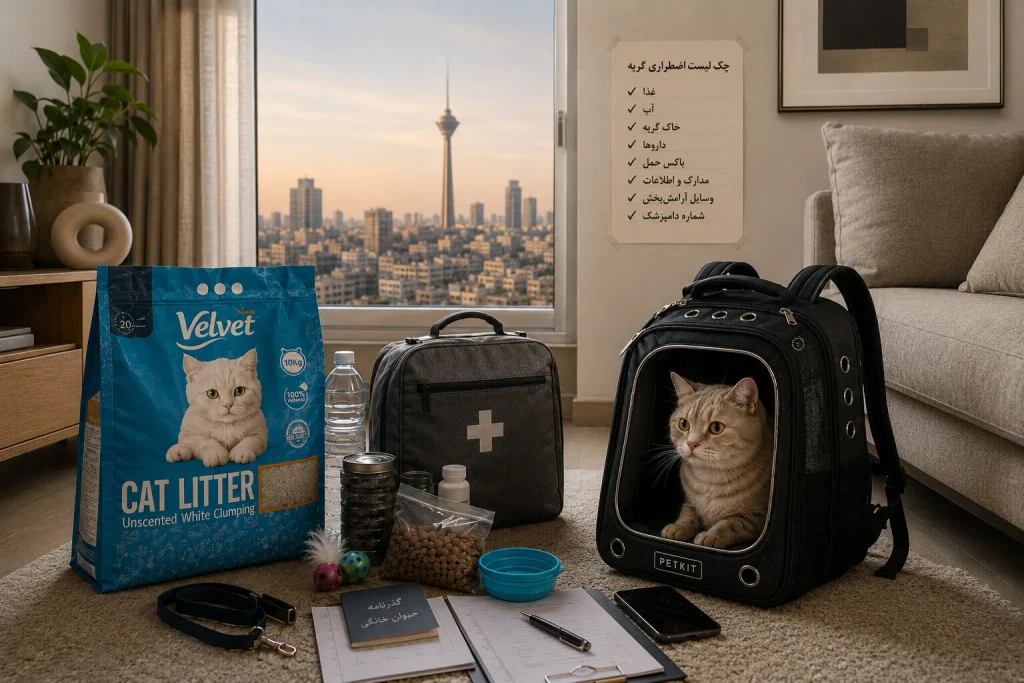
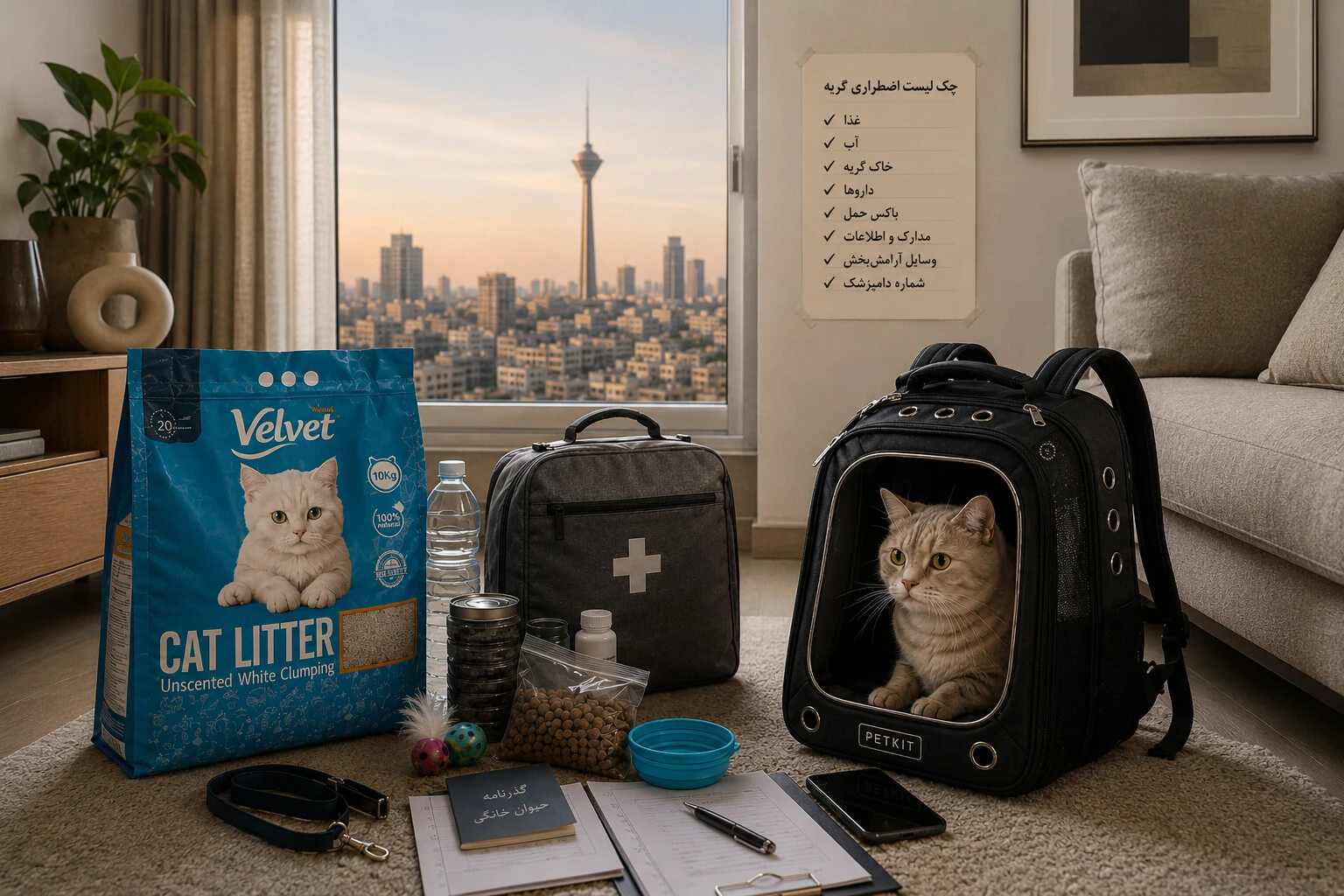
Kit Cat Emergency Kit; where to start?
You do not have to obtain everything at once. Starting today, gradually prepare an emergency kit for your cat.
1. Cat litter; something most people forget
Cat litter is usually the first thing to run out in a crisis and the last thing people think to stockpile.
When shops are closed or movement is restricted, a shortage of litter can itself become a new crisis; from health issues to increased cat stress and daily hassles for you.
It is recommended to always have enough litter stored at home for 2 to 4 weeks.
For crisis conditions, unscented clumping bentonite litters are usually a suitable choice; because they have high absorbency, better odour control, and make maintaining the litter box easier.
2. Sufficient food
Stock at least two weeks of food at home.
If your cat eats a special diet, sudden changes in diet during stressful conditions can cause digestive problems.
3. Drinking water
In many crises, access to safe water becomes limited.
Set aside several extra bottles of water for your cat to avoid problems in emergencies.
4. Medicines and supplements
If your cat takes specific medication, always have an emergency supply and periodically check its expiry date.
Carrier Transport; check right now where it is
One of the most common mistakes is that the carrier box is kept in a storage room, behind items, or in a place that is not quickly accessible.
In an emergency, you may only have a few minutes to leave the house.
Do these today:
Place the carrier box in an accessible location.
Accustom your cat to being in the carrier.
Put a soft blanket inside it.
Write your name and contact number on the carrier.
If you ever become separated from your cat, these simple details can help in finding them again.
Documents 10 minutes of time, a world of calm
Do you have a recent photo of your cat on your phone?
Do you know where the vaccination booklet is?
In an emergency or when visiting the vet, finding these documents immediately can be very difficult.
It is better to prepare these in advance:
Vaccination booklet
Medical records
Prescriptions for medications
Several clear photos of the cat
Microchip information (if any)
How To reduce our cat's stress during war and crisis conditions
Cats gain much of their calmness from their owner’s behaviour.
The calmer you are, the more likely your cat will remain calm.
To reduce your cat’s stress:
Keep them in a safe and quiet room.
Place a piece of clothing that smells like you next to their resting area.
Speak to them in a calm voice.
Do not allow them to freely leave the house during critical situations.
A cat that escapes in unstable conditions may not be able to find its way back.
If you are forced to leave the house
a common mistake is that people assume they will return in a few days and can leave the cat alone with some water and food.
The reality is that crises are unpredictable.
A few days may turn into several weeks.
It is better to beforehand:
consider a trustworthy and animal-loving person for emergencies.
check potential exit routes.
keep the cat's food, litter, water, and documents in a designated place.
Checklist Cat preparedness for emergency situations
Check these items now:
✓ Carry box is accessible
✓ I have stored at least two weeks of food
✓ I have stored at least two weeks of cat litter
✓ I have prepared additional drinking water
✓ Medical and vaccination documents are available
✓ I have a clear photo of the cat on my phone
✓ The vet's phone number is saved
✓ I have designated a reliable person for emergencies
Summary
No one likes to think about difficult and crisis scenarios. But being prepared does not mean worrying; it means being responsible.
Your cat does not understand the concept of war, crisis, or emergency. They only know whether their environment is safe or not and whether you are by their side or not.
By preparing a simple emergency kit, storing food and cat litter, keeping the carry box ready, and gathering essential documents, you can make better decisions during difficult days and better protect a family member who is completely dependent on you.